


Christianity VS Christian Nationalism and Religion
Dr. CECIL W THORN, Ph.D. (Theology)
INTRODUCTION
Christianity is a faith centered on the person and work of Jesus Christ, calling individuals from every nation to repentance, faith, and transformed living. Its authority flows from Christ and the teachings of Scripture, emphasizing love of God and neighbor, humility, and voluntary devotion. From its beginning, Christianity has understood itself as belonging to a spiritual kingdom that transcends political borders, ethnic identities, and national loyalties. The Christian’s ultimate allegiance is to Christ, not to any earthly power or government.
Christian nationalism, by contrast, is a political ideology that merges religious identity with national identity, often claiming that a particular nation has a special, divinely ordained relationship with God. In this framework, Christianity is used to define cultural belonging or justify political authority rather than to call people to personal faith and repentance. When faith is tied to citizenship or enforced through law or political pressure, the gospel risks being reduced to a tool of power rather than a message of grace.
Religion, more broadly, refers to organized systems of belief, ritual, and moral order that shape how societies understand the sacred. Christianity is a religion, but it is not merely a cultural institution or political identity. Confusing Christianity with nationalism or reducing it to a generic religious label blurs essential distinctions and can distort both faith and public life. Understanding these differences is necessary to preserve the integrity of Christian belief while allowing a pluralistic society to function with freedom of conscience and respect for all.
✝️ Christianity


What it is:
Christianity is a faith centered on Jesus Christ—His life, death, resurrection, and teachings.
Core focus
- Love God and love your neighbor (Matthew 22:37–40 ESV)
- Repentance, grace, salvation, and transformation of the heart
- The Kingdom of God (spiritual, not political)
- Serving others, humility, forgiveness, truth
Key characteristics
- Voluntary belief (faith cannot be coerced)
- Global and multi-ethnic
- Exists independently of any nation or government
- Loyalty to Christ above earthly power
Jesus explicitly said:
“My kingdom is not of this world.” (John 18:36 ESV)
Christian Nationalism




What it is:
Christian Nationalism is a political ideology that seeks to merge Christian identity with national identity, often asserting that a nation (commonly the U.S.) is divinely ordained as a “Christian nation.”
Core focus
- National power and identity
- Using Christianity as a cultural or political marker
- Government enforcement or privileging of Christian norms
- “Us vs. them” boundaries (often exclusionary)
Key characteristics
- Ties faith to citizenship
- Often selective use of Scripture
- Prioritizes political outcomes over spiritual integrity
- Can tolerate coercion “for the greater good”
The danger: Christianity becomes a tool rather than a truth.
Religion (as a broad category)

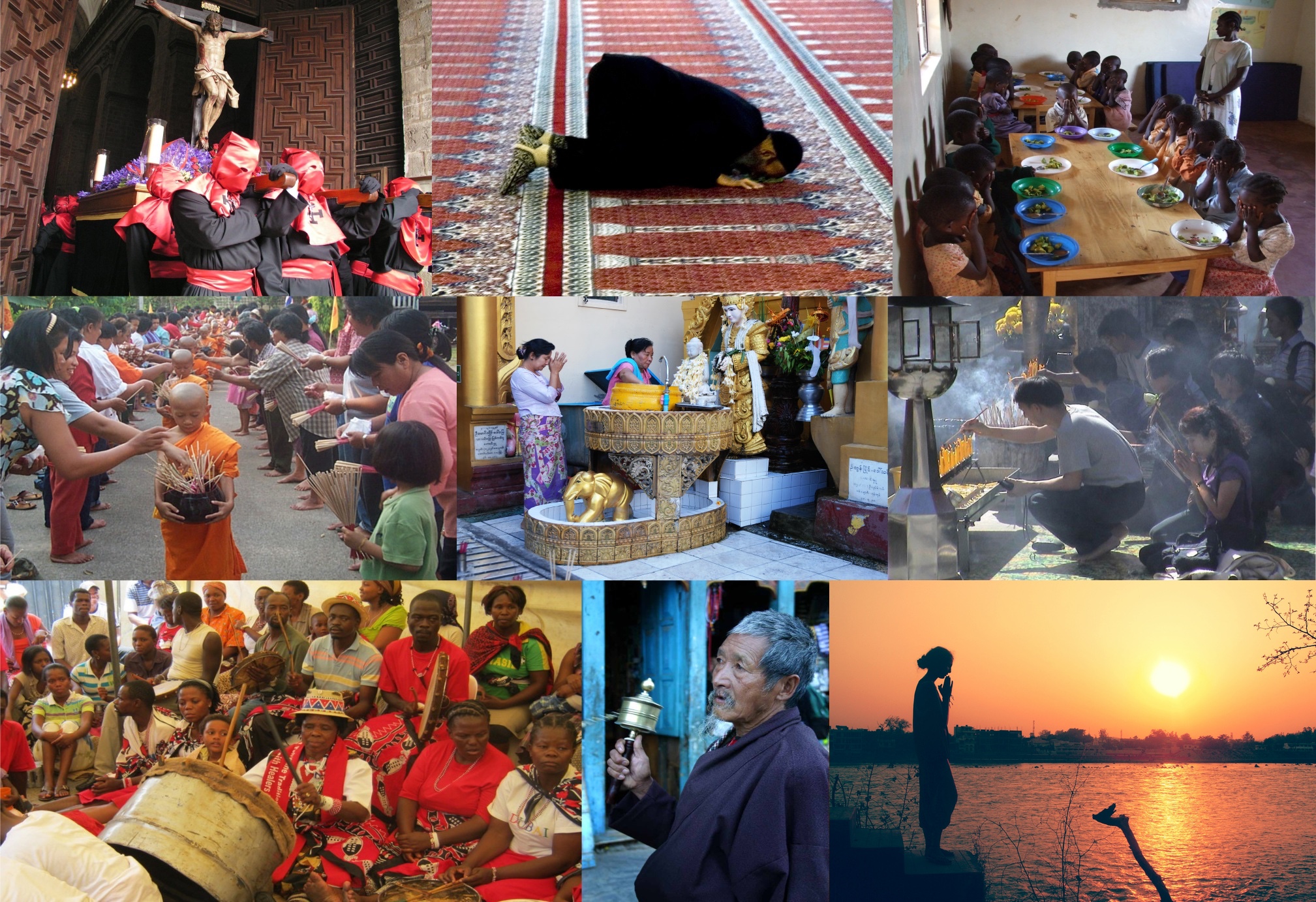


What it is:
Religion is a general category describing systems of belief, rituals, moral codes, and institutions related to the sacred.
Includes
- Christianity
- Islam
- Judaism
- Hinduism
- Buddhism
- Folk and civil religions
Key point
- Christianity is a religion, but not all religion is Christianity
- Religion can exist without personal faith
- Religion can be cultural, political, or purely institutional
Where the Confusion Happens
| Issue | Christianity | Christian Nationalism |
|---|---|---|
| Source of authority | Christ & Scripture | Nation, tradition, power |
| View of outsiders | Love & witness | Often suspicion/exclusion |
| Use of power | Servanthood | Control |
| Citizenship | Heavenly first | Earthly first |
| Method | Persuasion & sacrifice | Law, force, dominance |
Big warning sign:
When someone says “to be a good citizen, you must be Christian”—that’s not Christianity.
Why This Matters (Especially for Christians)
- Christianity thrives under freedom, not coercion
- The early church grew without political power
- When faith is fused with nationalism:
- The gospel gets distorted
- Critics are labeled enemies
- Christ is replaced with ideology
History lesson:
Whenever the church marries the state, the state eventually leads—and the church pays the price.
One-Sentence Summary
Christianity proclaims Christ as Lord of all people;
Christian Nationalism seeks to make Christianity serve a nation;
Religion is the broad human category that can be faithful, hollow, or political.
My Thoughts
Christianity is ultimately about a personal and communal commitment to Jesus Christ and obedience to His teachings. It calls believers to deny themselves, take up their cross, and follow Him (Luke 9:23, ESV), loving God with all their heart and loving their neighbor as themselves (Matthew 22:37–39, ESV). This faith transcends political parties, national borders, and cultural identities, remembering that Christ’s kingdom is not of this world (John 18:36, ESV). While Christians live within nations and respect governing authorities (Romans 13:1, ESV), their highest allegiance belongs to Christ alone (Acts 5:29, ESV).
When Christianity is blended with nationalism, the gospel risks being shaped by earthly power rather than the truth that sets people free (John 8:32, ESV). Scripture reminds believers that they are citizens of heaven (Philippians 3:20, ESV), strangers and exiles in this world (1 Peter 2:11, ESV), and that gaining the whole world is never worth losing the soul (Mark 8:36, ESV). Religion may include traditions and structures, but true Christianity is a living faith rooted in relationship with Christ, producing fruit marked by humility, righteousness, justice, and love (Galatians 5:22–23, ESV; Micah 6:8, ESV).
Copyright Notice © 2025 Dr. Cecil W Thorn, Ph.D. (Theology). Permission is hereby granted, free of charge, to any person obtaining a copy of this work authored by Dr. Cecil W Thorn, Ph.D. (Theology) to distribute, display, and reproduce the work, in its entirety, including verbatim copies, provided that no fee is charged for the copies or distribution. This permission is granted for non-commercial distribution only.
Feel free to reach out using the form below for any reason—whether you have comments on my articles, questions, or just want to connect. I’d love to hear from you and continue this journey together.