


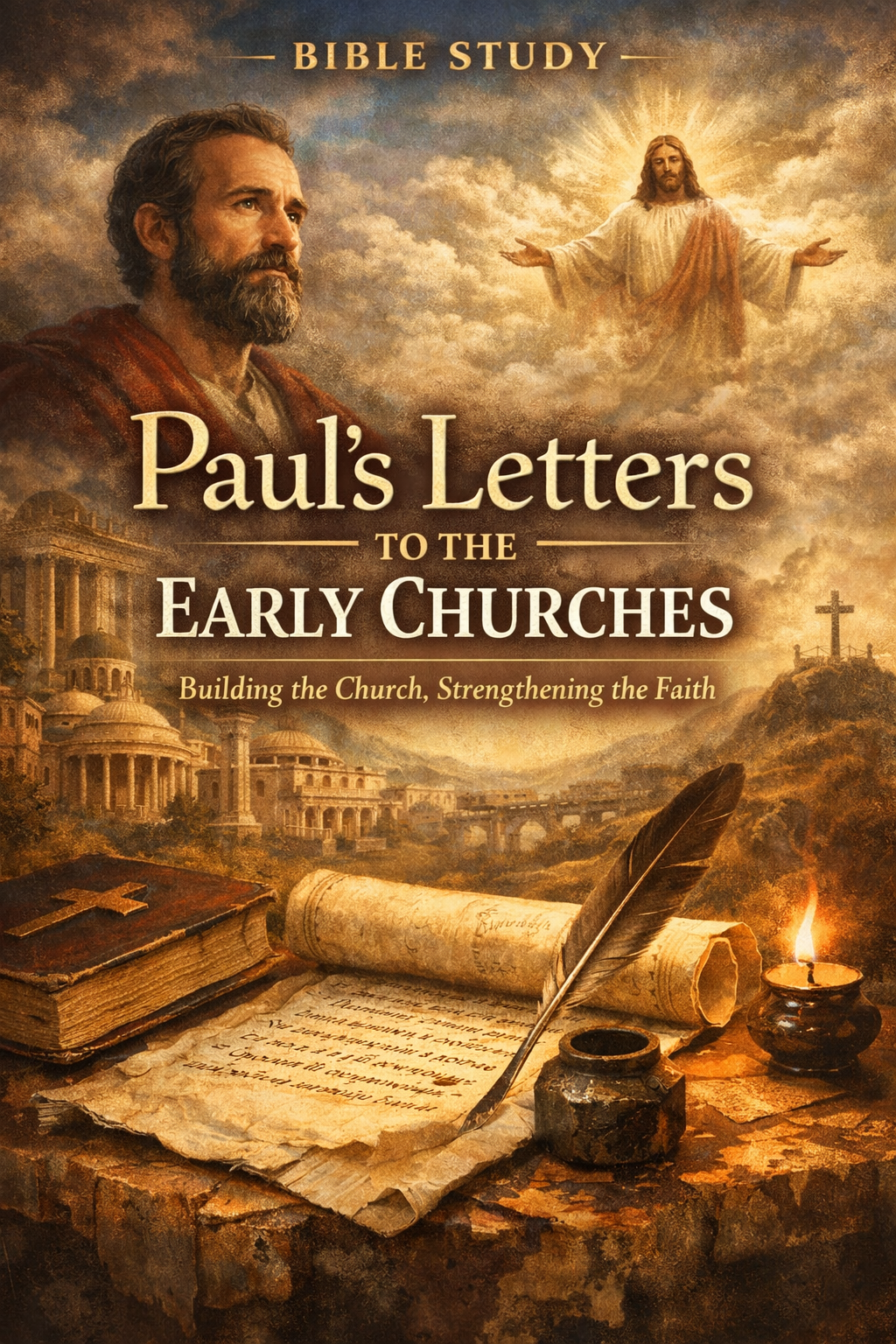
The Letters of Paul to the Early Churches
“Building the Church, Strengthening the Faith”
By Dr. Cecil W Thorn, PhD. (Theology)
Introduction
Overview of the letters of the Apostle Paul form a foundational part of the New Testament and continue to shape the life, doctrine, and mission of the Church today. Written to early Christian communities scattered across the Roman Empire, these letters addressed real struggles—persecution, false teaching, division, and spiritual immaturity.
Paul was not writing abstract theology. He was writing to people—new believers learning how to live out their faith in a world that often opposed them. Through the inspiration of the Holy Spirit, his words became more than letters; they became timeless truth for every generation.
These epistles reveal the heart of God: salvation by grace through faith, unity in Christ, the power of the Holy Spirit, and the call to holy living. As we study them, we discover not only what the early church faced but how we are to live today.
The Letters of Paul to the Early Churches (PDF) English: DOWNLOAD
Section 1: The Gospel of Grace (Romans & Galatians)
Key Scripture (ESV)
Romans 1:16–17
“For I am not ashamed of the gospel, for it is the power of God for salvation to everyone who believes… For in it the righteousness of God is revealed from faith for faith…”
Galatians 2:20–21
“I have been crucified with Christ. It is no longer I who live, but Christ who lives in me…”
Commentary
Paul emphasizes that salvation is not earned—it is a gift of grace. In both Romans and Galatians, he confronts legalism and reminds believers that righteousness comes through faith in Jesus Christ alone. This truth frees us from striving and invites us into a relationship rooted in grace.
Grace is the foundation of the Christian life. Without it, we would be trapped in an endless cycle of trying and failing. Paul makes it clear that no amount of good works can justify us before God. Instead, it is Christ’s finished work on the cross that secures our salvation. This message would have been radical to the early church—and it still challenges many today who feel they must “earn” God’s favor.
Paul also warns against returning to legalism after receiving grace. The Galatians had begun well but were drifting back into a works-based mindset. This serves as a powerful reminder that we must remain anchored in the truth of the gospel and not be swayed by teachings that add requirements to what Christ has already completed.
Furthermore, grace does not lead to careless living—it leads to transformed living. When we truly understand grace, it produces gratitude, humility, and obedience. We don’t obey to be saved; we obey because we are saved. That shift changes everything about how we live our daily lives.
Discussion Questions
- What is the gospel according to Paul?
- Why is grace important in salvation?
- What does it mean to be “crucified with Christ”?
(See Answer sheet)
Encouragement
You do not have to earn God’s love—you already have it in Christ. Walk confidently in His grace today.
Section 2: Unity and Maturity in the Church (1 & 2 Corinthians)
Key Scripture (ESV)
1 Corinthians 1:10
“I appeal to you… that all of you agree, and that there be no divisions among you…”
2 Corinthians 5:17
“Therefore, if anyone is in Christ, he is a new creation…”
Commentary
The Corinthian church struggled with division, immorality, and spiritual pride. Paul calls them back to unity in Christ and reminds them of their new identity. Spiritual maturity is not about knowledge alone—it is about transformation and love.
Division often arises when believers focus more on personalities, preferences, or pride rather than Christ. Paul addresses this head-on by urging the church to be of one mind and purpose. Unity does not mean uniformity—it means being centered on Christ despite differences. This is just as relevant today as it was then.
Paul also deals with moral issues within the church, emphasizing that believers are called to live differently. The culture around Corinth was morally corrupt, and the church was being influenced by it. Paul reminds them—and us—that holiness matters. Our lives should reflect the transforming power of Christ.
In addition, Paul highlights love as the greatest evidence of spiritual maturity (1 Corinthians 13). Gifts, knowledge, and abilities are important, but without love, they are meaningless. True maturity is seen in how we treat others, forgive, serve, and build one another up in Christ.
Discussion Questions
- What was a major problem in Corinth?
- What does it mean to be a “new creation”?
- How can believers maintain unity?
(See Answer sheet)
Encouragement
God is still shaping you. You are not who you used to be—walk in your new identity.
Section 3: Living a Christ-Centered Life (Ephesians, Philippians, Colossians)
Key Scripture (ESV)
Ephesians 2:8–9
“For by grace you have been saved through faith…”
Philippians 4:13
“I can do all things through him who strengthens me.”
Colossians 3:2
“Set your minds on things that are above…”
Commentary
These letters focus on identity, joy, and spiritual focus. Paul teaches believers to live with purpose, grounded in Christ. Whether facing hardship or prosperity, the believer’s life should reflect Christ in all things.
In Ephesians, Paul reveals the believer’s identity in Christ—chosen, redeemed, and sealed by the Holy Spirit. Understanding who we are in Christ is essential to living a victorious Christian life. When we know our identity, we are less likely to be shaken by circumstances or the opinions of others.
Philippians teaches us about joy in all circumstances. Paul wrote this letter from prison, yet it overflows with encouragement and rejoicing. This shows us that joy is not based on external conditions but on our relationship with Christ. True joy comes from knowing Him and trusting His plan.
Colossians centers on the supremacy of Christ. Paul reminds believers to set their minds on things above and not be distracted by worldly philosophies. In a world full of competing voices, we must stay rooted in the truth of who Christ is and what He has done. He is not just part of our life—He is our life.
Discussion Questions
- What is the foundation of salvation?
- How can believers maintain joy?
- What does it mean to set your mind on things above?
(See Answer sheet)
Encouragement
No matter your situation, Christ is your strength. Keep your eyes on Him.
Section 4: Hope and Perseverance (1 & 2 Thessalonians)
Key Scripture (ESV)
1 Thessalonians 4:16–17
“For the Lord himself will descend from heaven with a cry of command… and the dead in Christ will rise first…”
2 Thessalonians 3:3
“But the Lord is faithful. He will establish you and guard you against the evil one.”
Commentary
Paul encourages believers to remain steadfast as they await Christ’s return. These letters remind us that our hope is not in this world but in the promise of Jesus’ coming.
The early church faced persecution, uncertainty, and suffering for their faith. Yet Paul consistently redirected their focus away from present hardship and toward eternal hope. The promise of Christ’s return was not meant to create fear, but confidence and assurance. Knowing that Jesus will return gives meaning to our suffering and purpose to our endurance.
Paul also corrects misunderstandings about the second coming. Some believers had become anxious, while others had become idle, thinking the return of Christ was immediate. Paul brings balance—encouraging readiness without fear, and faithfulness without complacency.
Additionally, Paul emphasizes God’s faithfulness in sustaining His people. We are not left to endure trials in our own strength. God establishes us, strengthens us, and guards us.
Finally, perseverance is a mark of genuine faith. It is not how we begin the race, but how we finish it. Endurance is active trust lived out daily.
Discussion Questions
- What hope do believers have?
- Why is perseverance important?
- How does God help us endure?
(See Answer sheet)
Encouragement
Hold on—God is faithful, and your future is secure in Him.
Section 5: Leadership and Sound Doctrine (Timothy, Titus, Philemon)
Key Scripture (ESV)
2 Timothy 3:16–17
“All Scripture is breathed out by God…”
Titus 2:7–8
“Show yourself in all respects to be a model of good works…”
Commentary
Paul instructs leaders on how to guide the church with integrity and truth. Sound doctrine and godly living go hand in hand. These letters emphasize discipleship, leadership, and accountability.
Leadership within the church is a sacred responsibility. Paul reminds Timothy and Titus that leadership is not about authority alone, but about example.
Paul also emphasizes the importance of sound doctrine and guarding against false teaching.
Discipleship creates growth, and Philemon demonstrates reconciliation and transformation through Christ.
Discussion Questions
- Why is Scripture important?
- What qualities should leaders have?
- What is the role of discipleship?
(See Answer sheet)
Encouragement
God can use you to influence others—stay rooted in His Word and live faithfully.
From My Heart to Yours
Paul’s letters are not just ancient writings—they are living words that speak directly into our lives today. When I read them, I am reminded that God meets us right where we are—whether in struggle, doubt, growth, or victory.
Just like the early church, we face challenges. But we are not alone. The same Spirit that strengthened them strengthens us today. My prayer for you is that you will not just read these letters but live them.
Walk in grace. Stand in truth. Love deeply. And never forget—you are part of God’s greater story.
There are moments in life when we feel weak, uncertain, or even overwhelmed by what lies ahead. In those moments, Paul’s words remind us that God’s strength is made perfect in our weakness. You are not expected to carry this journey alone—God walks with you every step of the way.
I also want to encourage you to stay rooted in God’s Word daily. The early believers didn’t have the full New Testament as we do today, yet they held firmly to the truth they received. How much more should we cling to it now? Let His Word guide your decisions, shape your thoughts, and strengthen your faith.
Finally, remember that your life is a testimony. Others are watching—not for perfection, but for authenticity. As you live out these truths, you become a light that points others to Christ. Never underestimate the impact your faithfulness can have on someone else’s eternity.

Dr. Cecil W. Thorn
CWT Ministry
Final Thought
The letters of Paul remind us that Christianity is not just about belief—it is about transformation. From grace to growth, from unity to perseverance, these writings call us into a deeper walk with Christ.
The early church changed the world because they lived what they believed. And so can we.
Transformation does not happen overnight—it is a daily process of surrender, renewal, and growth. Paul’s letters show us that even strong believers had struggles, yet God continued to work in them. Be patient with yourself, but remain committed to growing in Christ.
We are also reminded that the church is not a building—it is people. You and I are part of God’s living church, called to reflect His love and truth in the world. Every act of kindness, every word of truth, and every moment of faith matters more than we often realize.
As you move forward, let these letters not just inform your mind but transform your heart. Let them shape how you live, how you love, and how you serve. And above all, keep your eyes on Jesus—the author and finisher of your faith.
Answer Key (All Sections)
Section 1
- Salvation through faith in Christ
- It is a gift from God
- New life in Christ
Section 2
- Division
- New identity in Christ
- Unity through love and humility
Section 3
- Grace through faith
- Trusting Christ
- Focus on eternal things
Section 4
- Christ’s return
- Endurance in trials
- God strengthens and guards
Section 5
- It equips believers
- Integrity and truth
- Spiritual growth of others
Copyright Notice © 2025 Dr. Cecil W Thorn, Ph.D. (Theology). Permission is hereby granted, free of charge, to any person obtaining a copy of this work authored by Dr. Cecil W Thorn, Ph.D. (Theology) to distribute, display, and reproduce the work, in its entirety, including verbatim copies, provided that no fee is charged for the copies or distribution. This permission is granted for non-commercial distribution only.